Advanced Packaging
Ensure chiplet and die-to-die interconnect health, performance, and reliability across production and in-field operation.
Ensure chiplet and die-to-die interconnect health, performance, and reliability across production and in-field operation.
Take predictive actions before packaging and SiP assembly.
Enables early detection of outliers, improving yield and preventing costly packaging of marginal dies. Reduce iterative testing, maintain die inventory instead of packaged chips, and lower overall packaging and SiP costs while improving end-product quality.
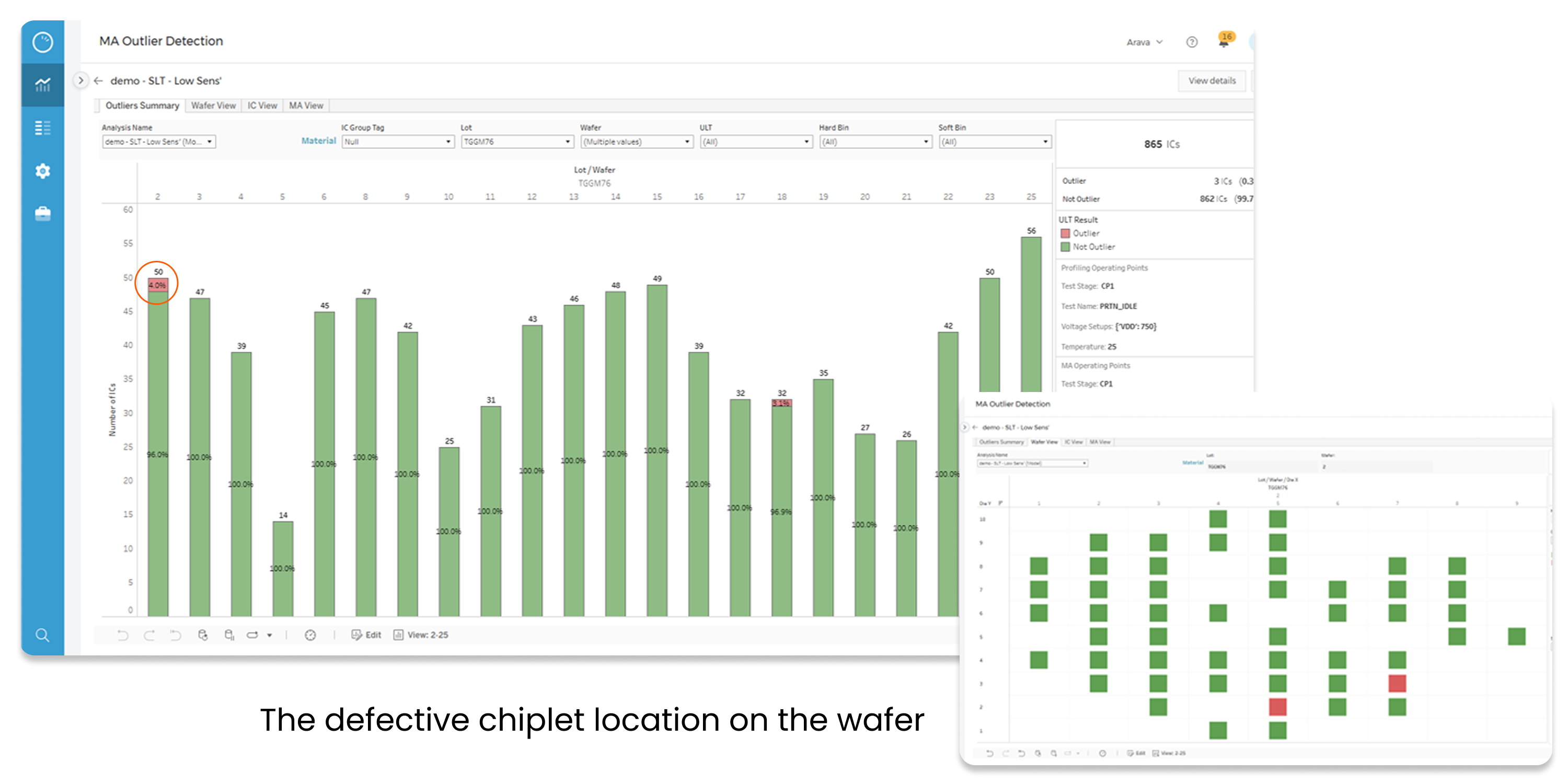
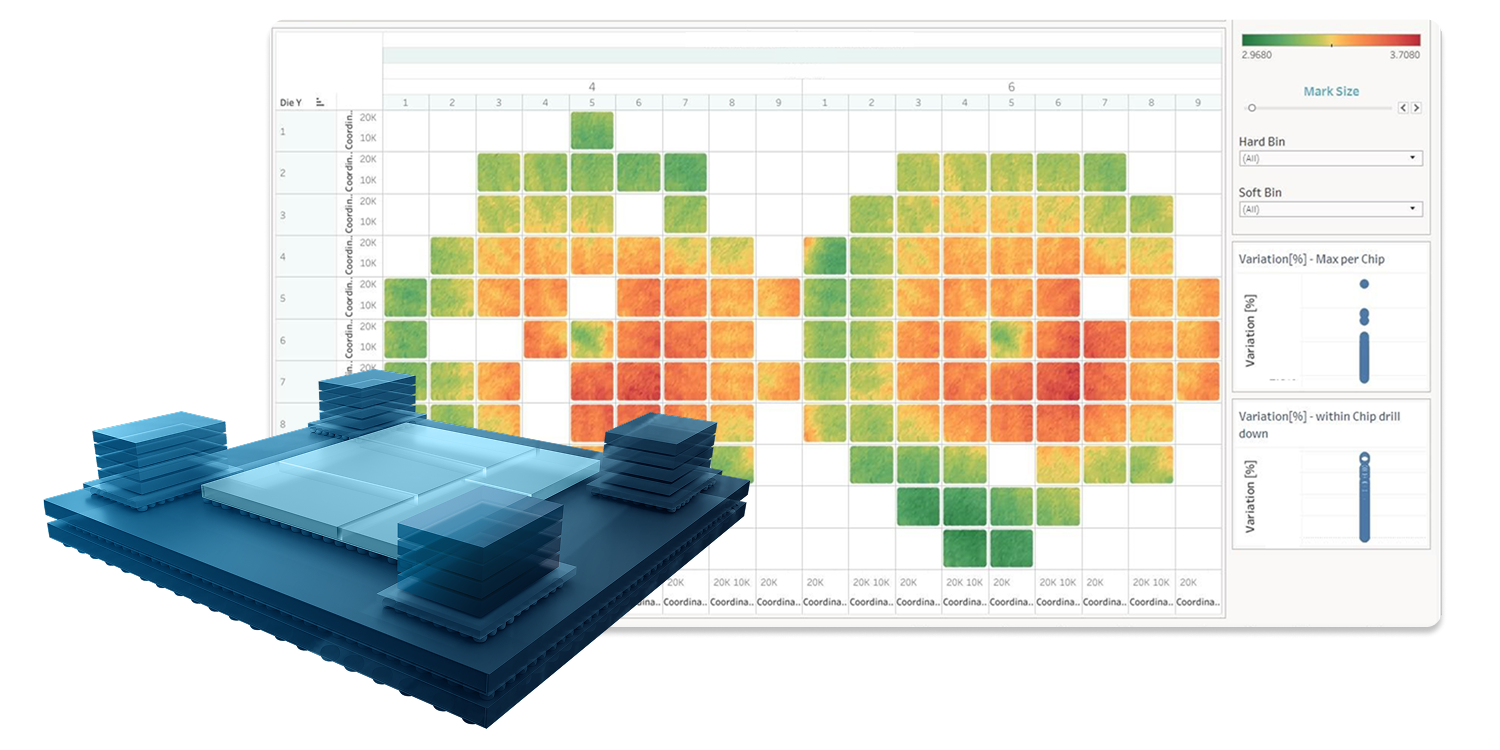
Enables smart KGD selection and binning to improve test quality early in the flow.
Gain parametric grading of power consumption, leakage, speed and more at Wafer Sort. Optimize yield and streamline inventory through smart die matching.
Continuously monitor chiplet health and performance in the field to reduce power, prevent failures, optimize throughput, and enable predictive maintenance.
Applicable across heterogeneous systems - including CPU, GPU, NPU, switches, IO dies, and custom HBM logic - this approach ensures smarter, data-driven SiP deployment at scale.
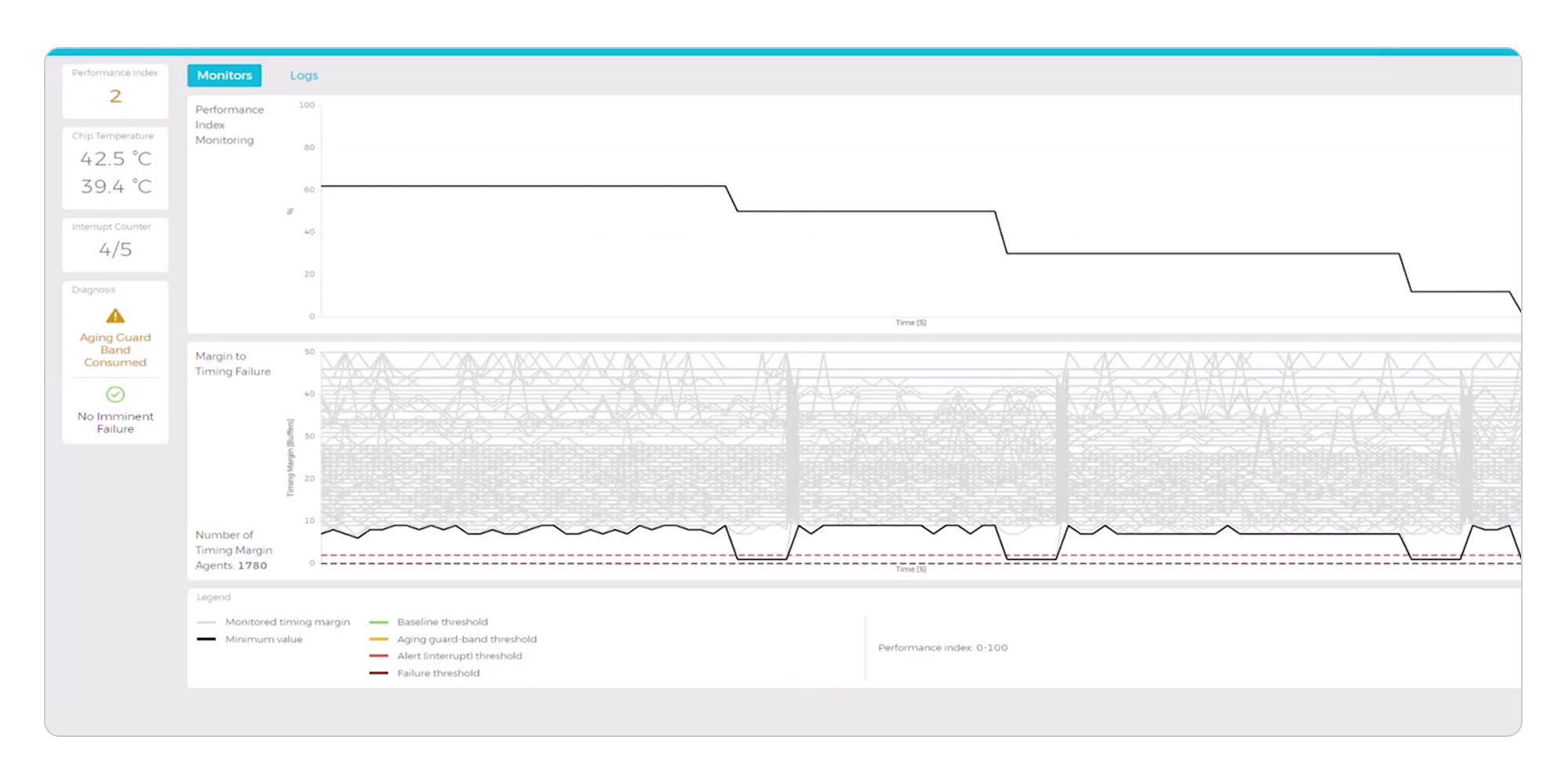
Gain deep insight into how high-bandwidth interconnects behave under real operating conditions.
Parametric characterization enables per-lane grading of eye width, jitter, skew, and margin, providing the data needed to optimize design, test coverage, and interconnect quality.
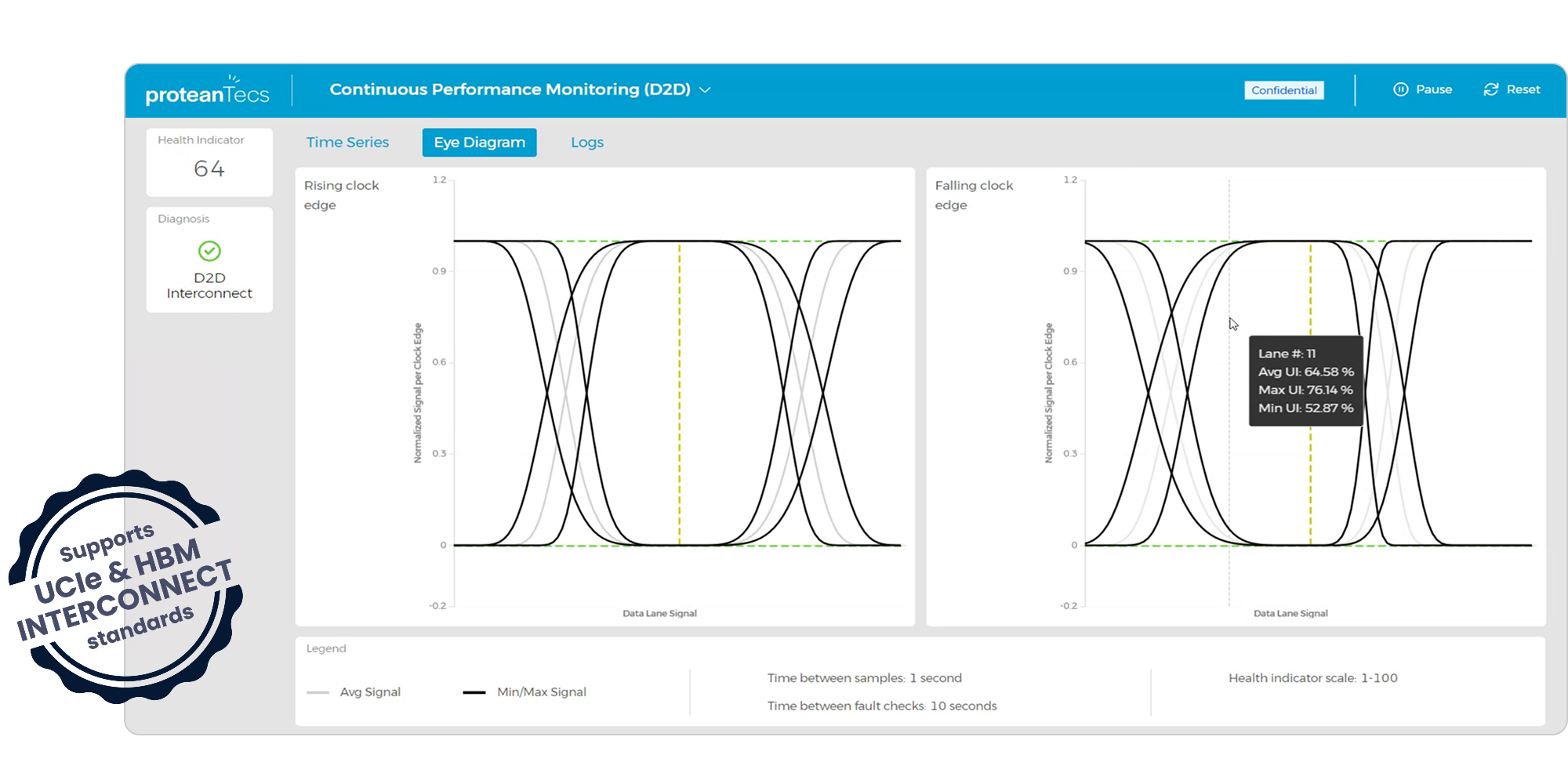
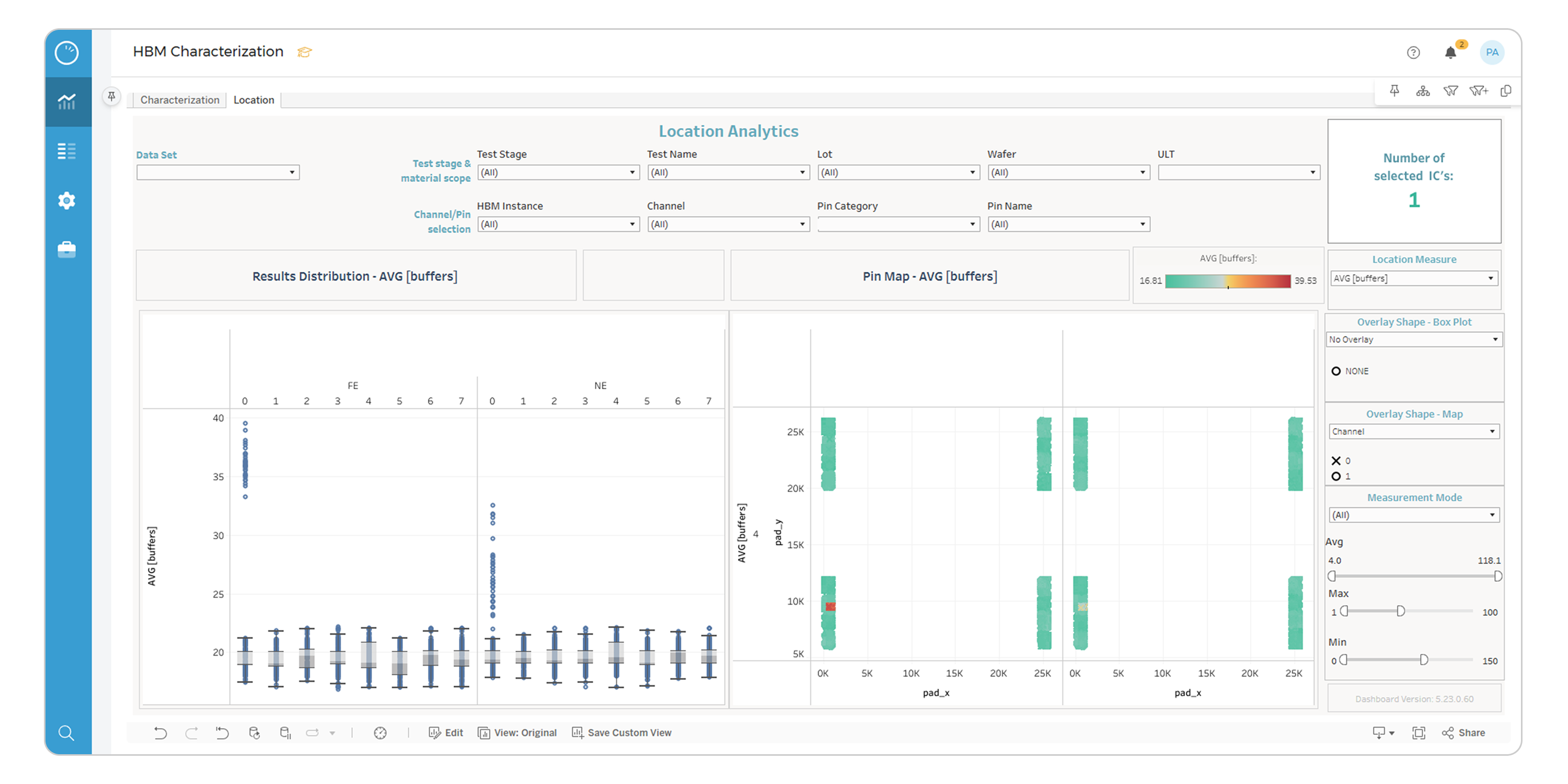
Identify marginal lanes and latent defects that traditional pass or fail testing cannot expose.
Early outlier detection on the ATE supports lane grading and targeted lane repair, including the use of spare lanes or module-level decisions, to improve yield and prevent downstream escapes.
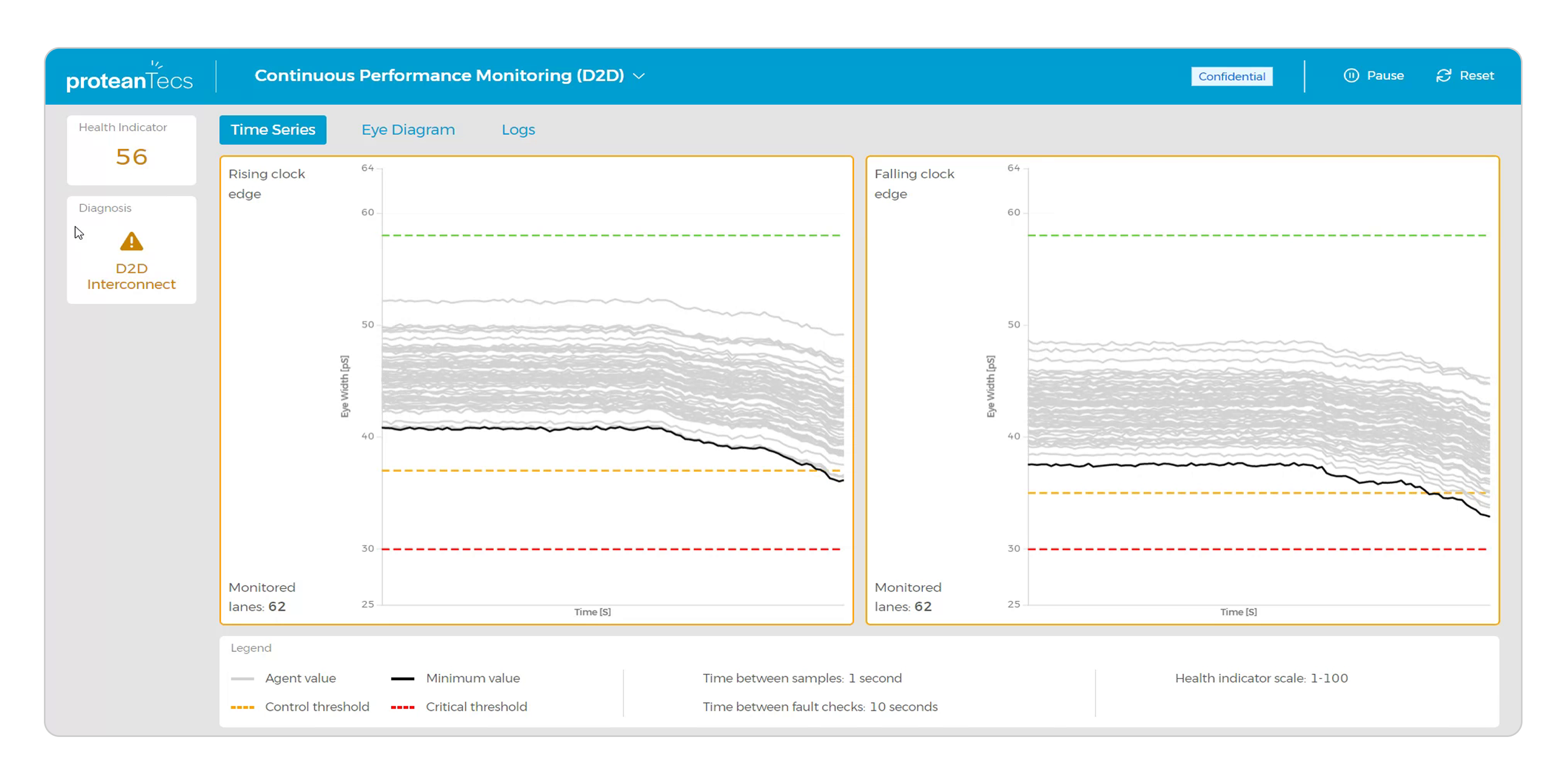
Continuously track interconnect health during operation to detect degradation before it leads to failure.
In-mission monitoring enables timely alerts, spare lane activation, and module swap decisions to maintain reliability and extend system lifetime.
Explore more white papers, webinars, case studies and brochures regarding power and performance optimization.

This 40-minute webinar offers 3 unique perspectives on this growing market and ecosystem from experts.

Explore the fabless chipmaker's quality leap thanks to die-to-die interconnect failure prediction based on parametric lane grading

This white paper discusses a method for adding testability and visibility into advanced HBM3 interconnects.
June Paik • CEO, FuriosaAI
Get answers to common questions about how proteanTecs enables shift-left decisions, improves yield, and ensures reliability for advanced packaging and chiplet-based SiPs.
Heterogeneous integration and advanced packaging introduce new failure modes that traditional test and validation cannot detect. proteanTecs closes this visibility gap by embedding deep, in-situ monitoring into chiplets, PHYs, and die-to-die interconnects, enabling early outlier detection, yield improvement, and long-term reliability assurance across the entire SiP lifecycle.
proteanTecs supports leading advanced packaging and heterogeneous integration flows, including CoWoS, InFO, EMIB, AIB, OpenHBI, Bow, and other 2.5D/3D SiP architectures. The solution is designed to be packaging-agnostic and scales across chiplet-based designs using standards such as UCIe and high-bandwidth memory interfaces including HBM4.
By shifting quality and reliability decisions earlier, before packaging and SiP assembly, proteanTecs enables identification of marginal dies and interconnect outliers at wafer sort and early test stages. This prevents costly packaging of failing or degrading dies, reduces iterative testing, improves packaged yield, and allows customers to keep die inventory instead of packaged chips.
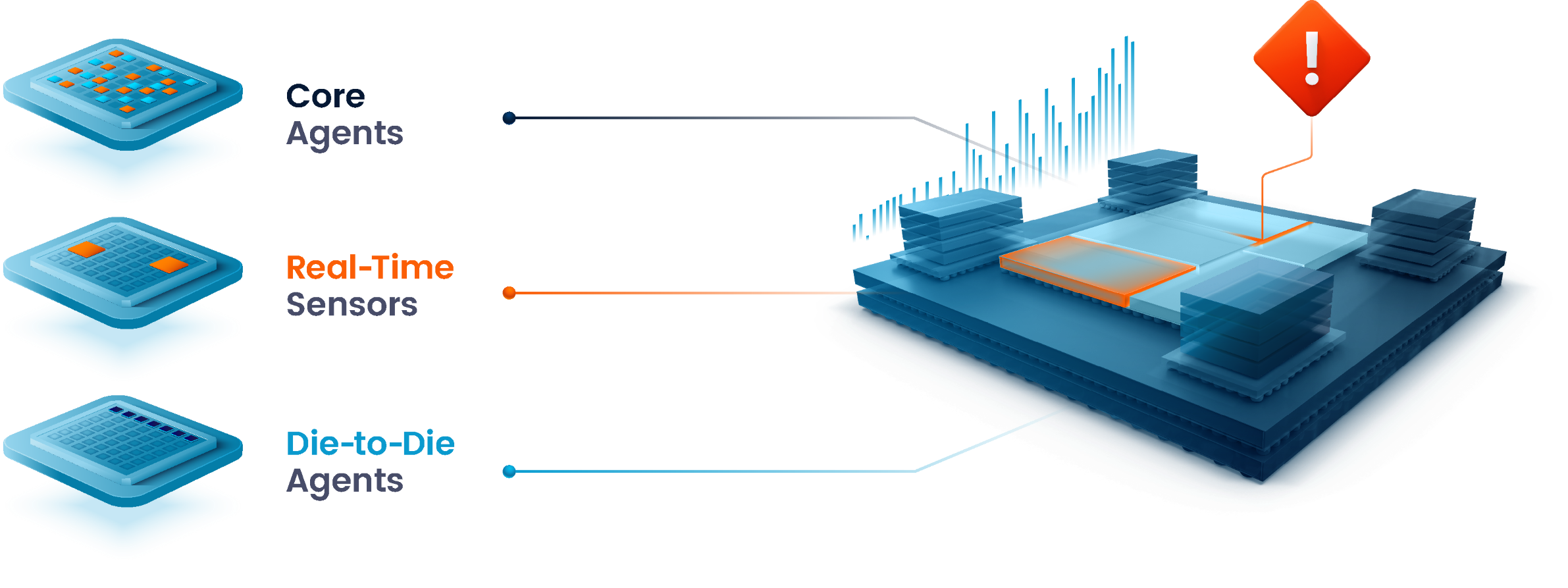
Die-to-die interconnect monitoring is enabled through Tile-Connectivity Agents (TCA) embedded directly inside PHYs, combined with dedicated software applications. These agents provide deep visibility into interconnect behavior, enabling per-lane characterization, early detection of marginality, and continuous monitoring of UCIe and HBM links during both production and in-field operation.




.svg)

.svg)

.svg)