System Production
Optimize system production at scale with deep-data insights that improve quality and performance, from pilot builds to full-scale production.
Optimize system production at scale with deep-data insights that improve quality and performance, from pilot builds to full-scale production.
Predictive insight for system production. Powered by telemetry, not guesswork.









AVS Pro™ provides a real-time, deep data application that monitors power usage in mission-mode with a failure prevention layer, going far beyond conventional Adaptive Voltage Scaling (AVS) methods.
%20(1).png?width=600&height=375&name=image%20(21)%20(1).png)
A HW decision making approach, based on aggregated timing states from Margin Agents measurements
The decision is discrete: Two additional steps for Frequency or Voltage
Optimize Power per device during chip test

proteanTecs AVS Pro™ provides a real-time, deep data application that monitors power usage in mission-mode with a failure prevention layer, going far beyond conventional Adaptive Voltage Scaling (AVS) methods.
proteanTecs AVS Pro™ provides a real-time, deep data application that monitors power usage in mission-mode with a failure prevention layer, going far beyond conventional Adaptive Voltage Scaling (AVS) methods.
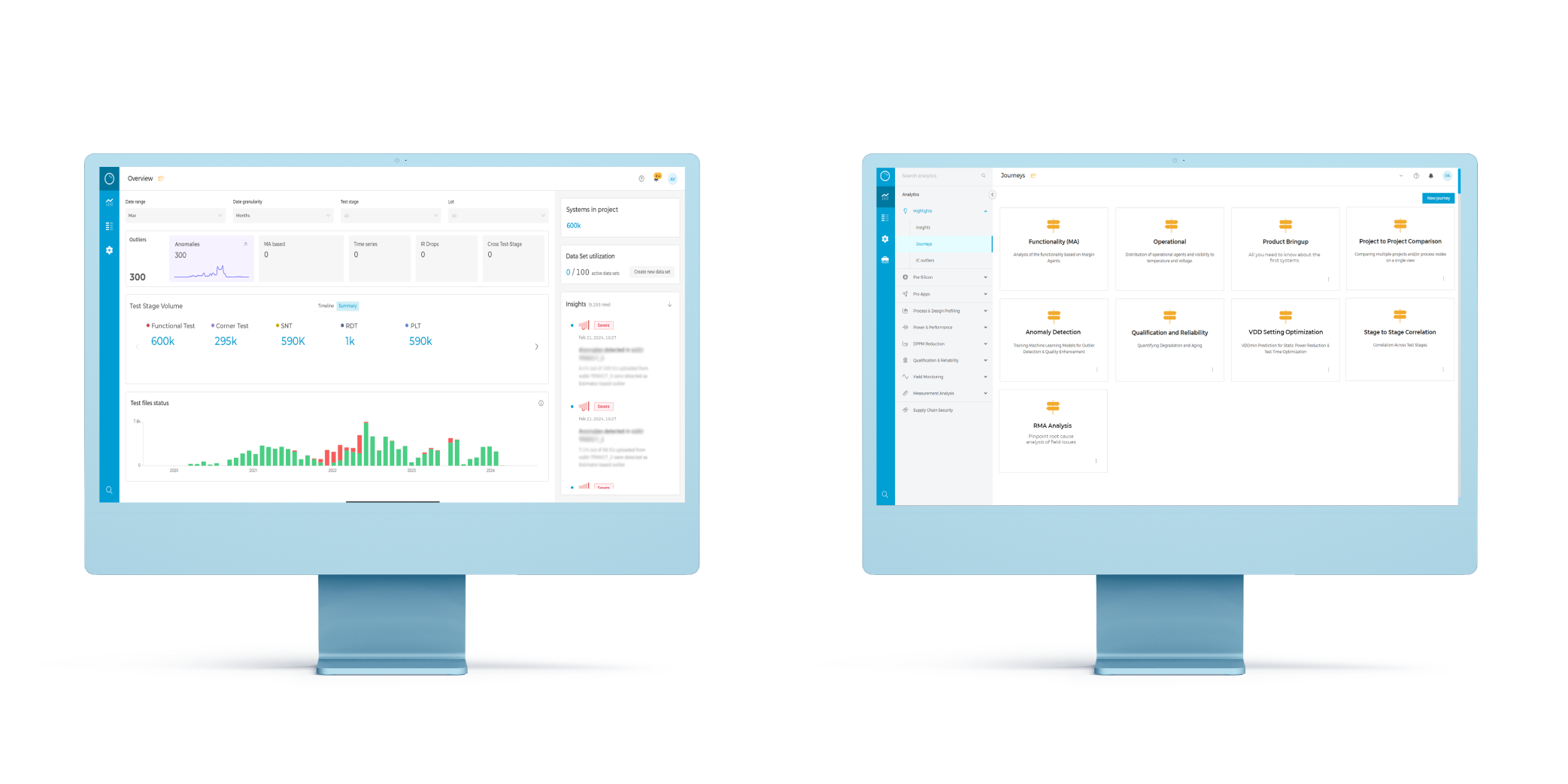
Design-aware, guided analytics with a production cockpit and pre-built journeys.
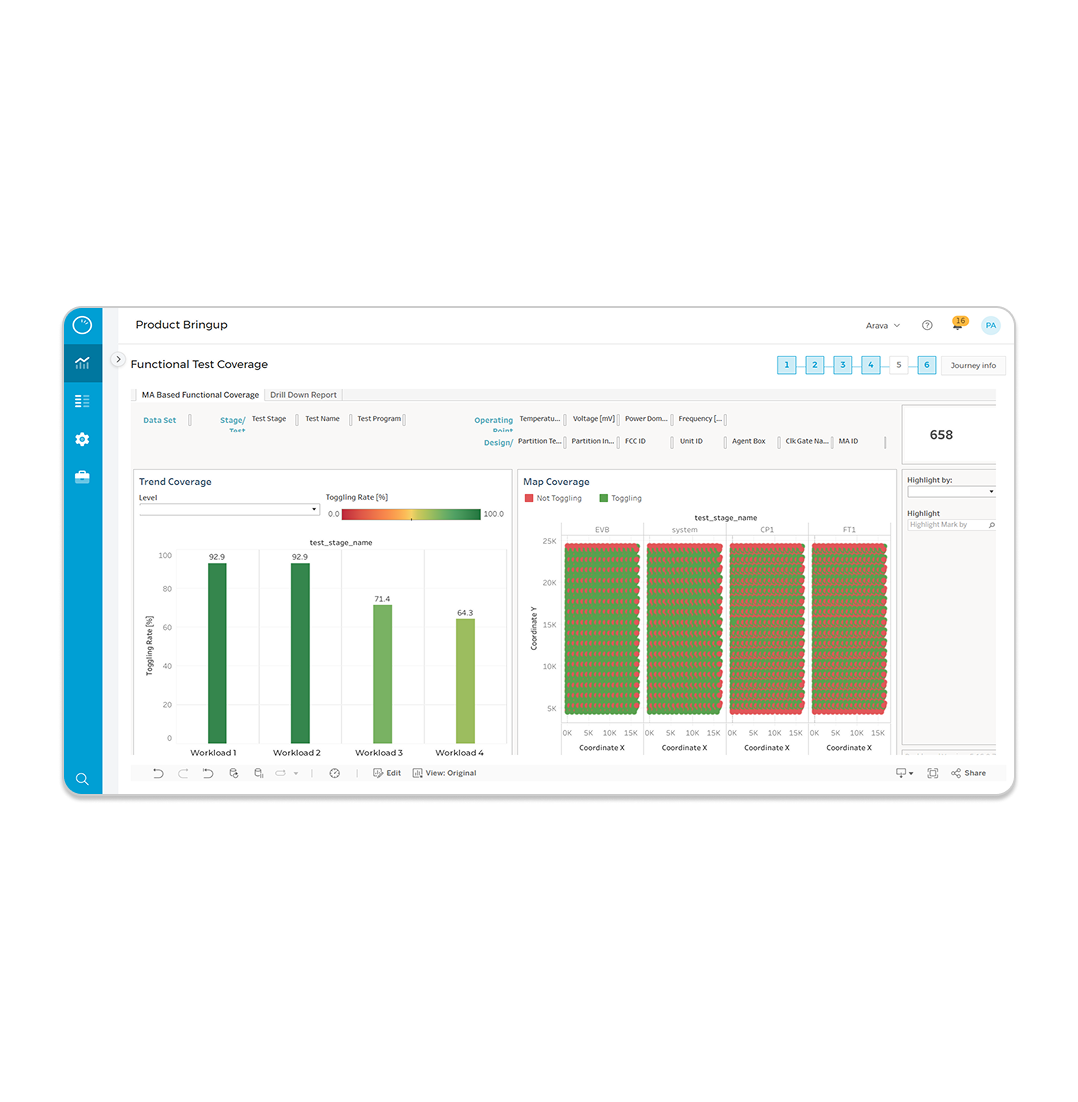
Quantify functional test coverage with silicon-aware insight.
Timing-margin-based toggle activity reveals how effective each test really is, helping teams select the right tests, expose coverage gaps, and create higher-quality test sets.
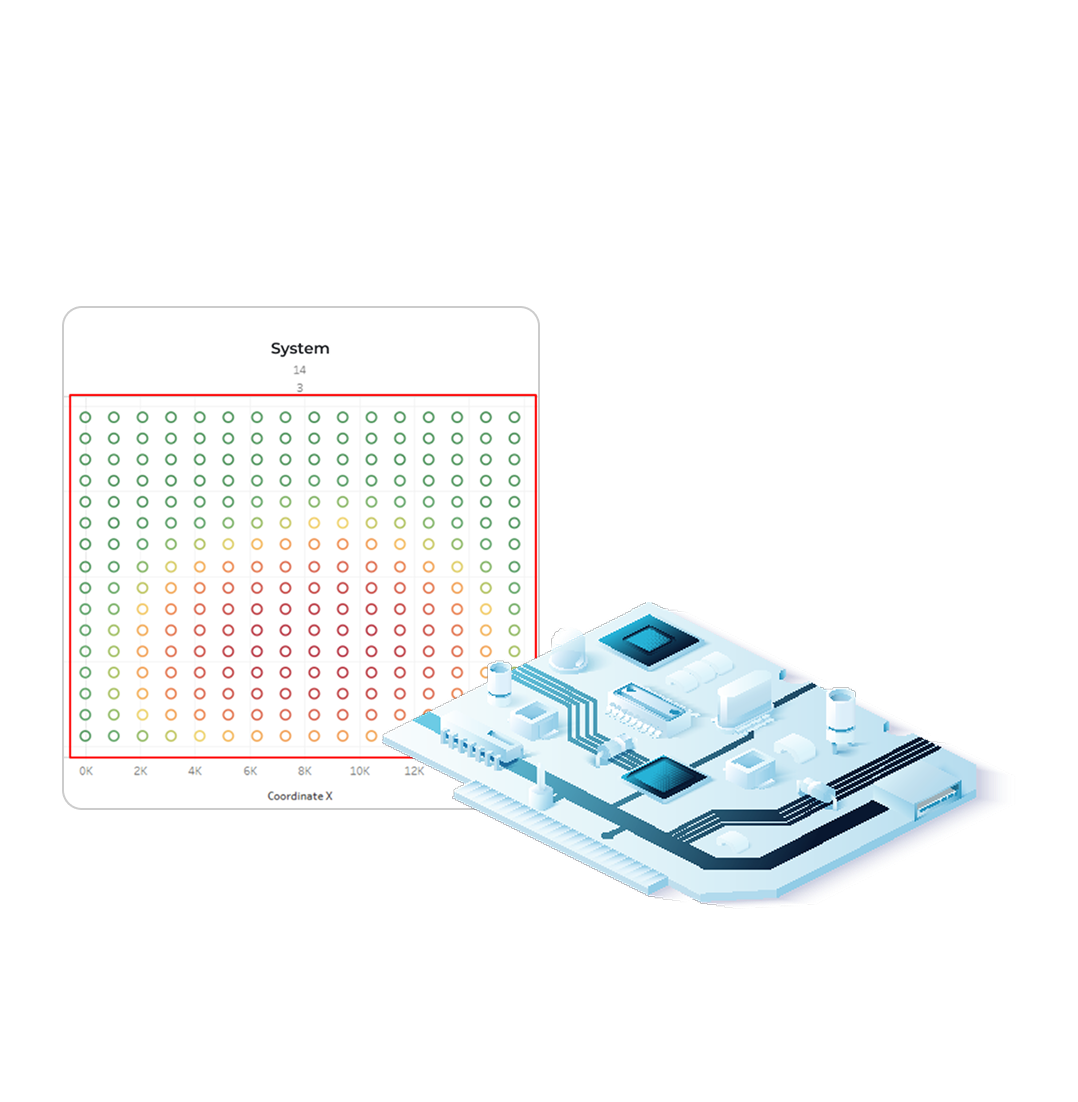
Debug power integrity where it actually matters - under real workloads.
Measure AC IR drop in-system to reveal how workloads impact power delivery, pinpoint bottlenecks, and optimize board-level power for max stability and performance.
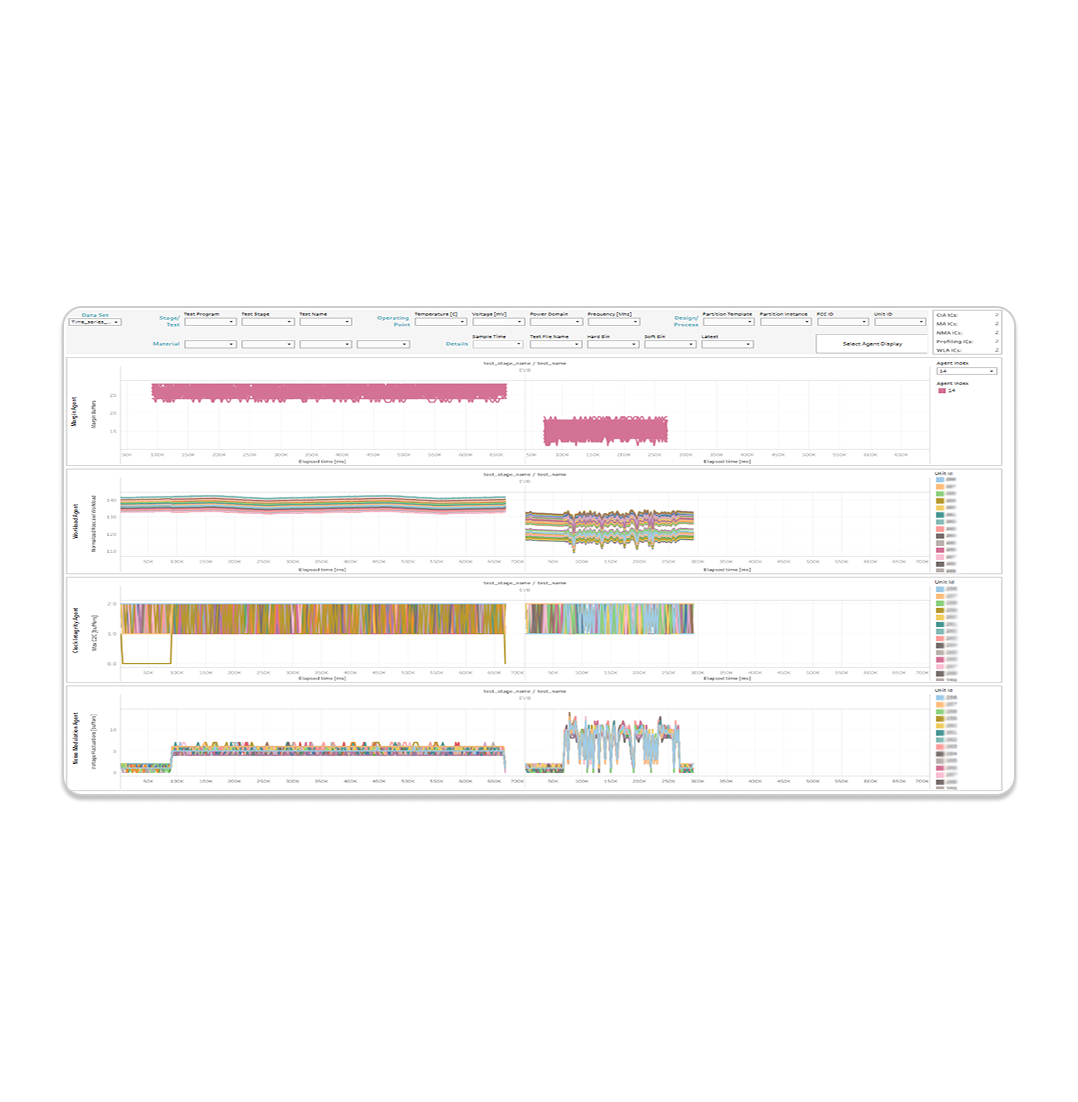
Precisely tune system performance by correlating real workloads with deep silicon-level telemetry.
Identify worst-case scenarios and quantify their true impact, to optimize performance settings in the system, without over-guardbanding.
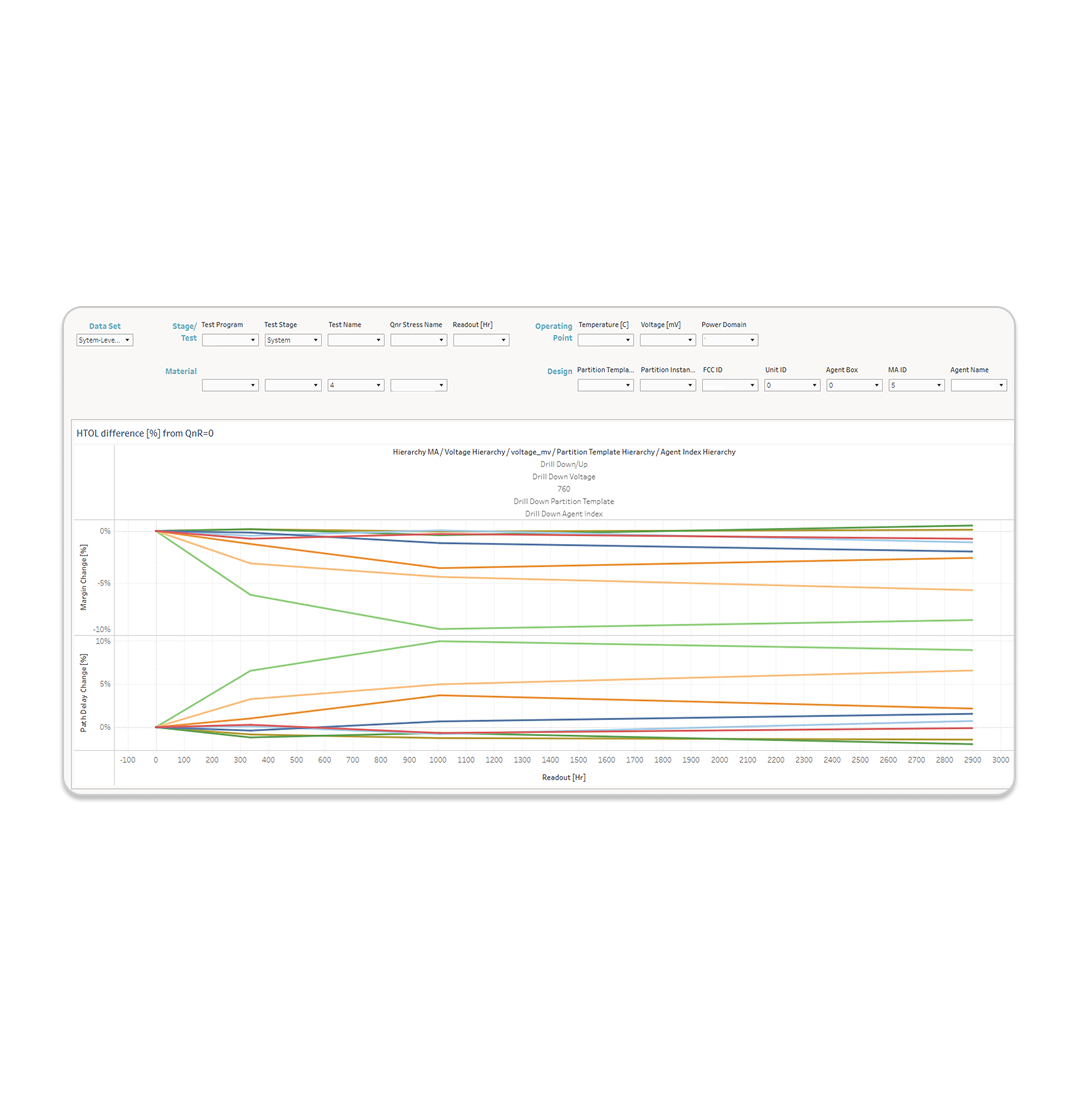
Continuously quantify reliability under real workloads.
Measure timing margin degradation over time to understand aging behavior, identify reliability risks early, and model long-term system performance.
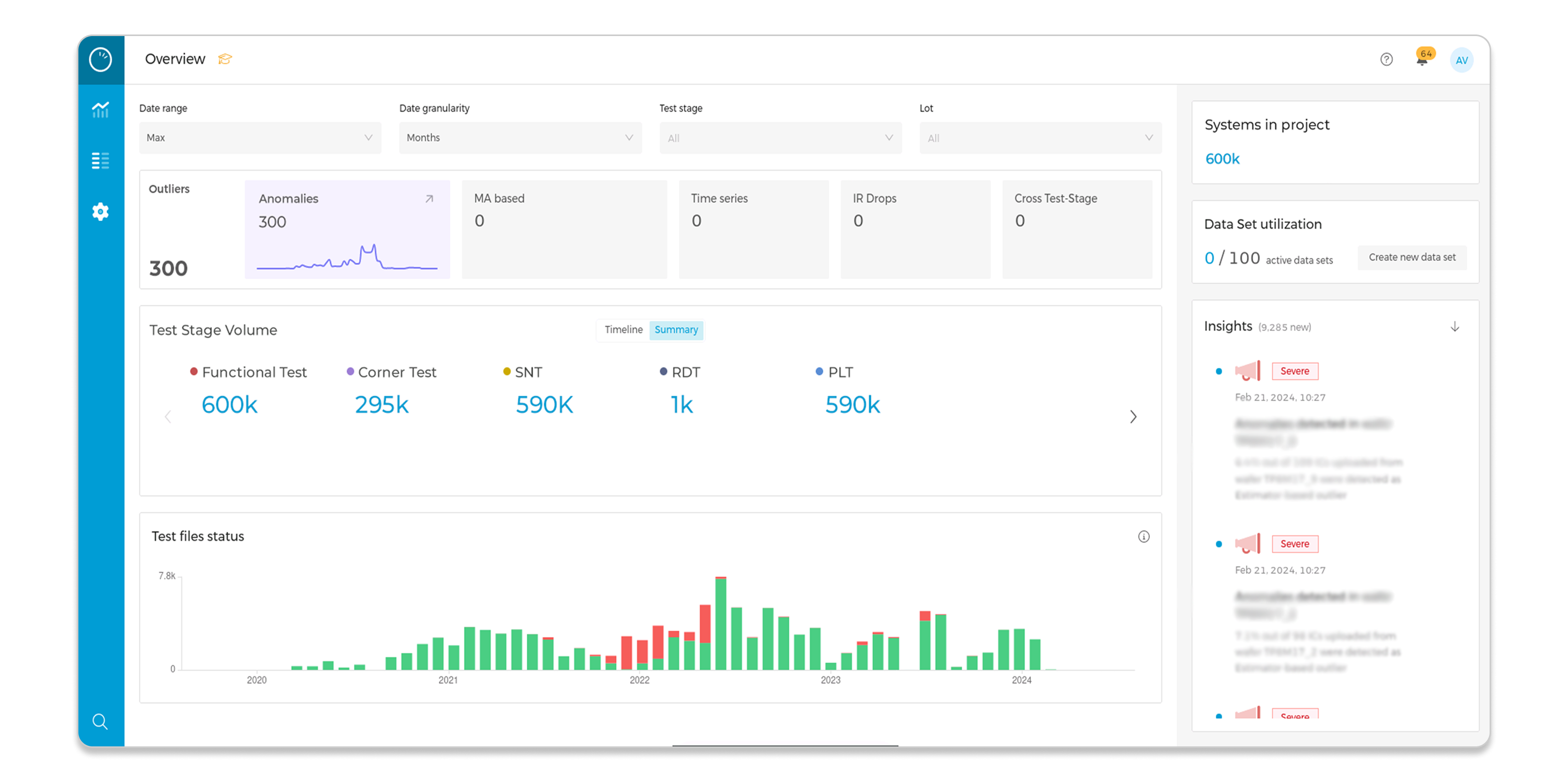
Analyze system behavior across large production volumes to uncover trends, outliers, and systemic issues that are invisible at the single-unit level, improving overall quality and reliability.
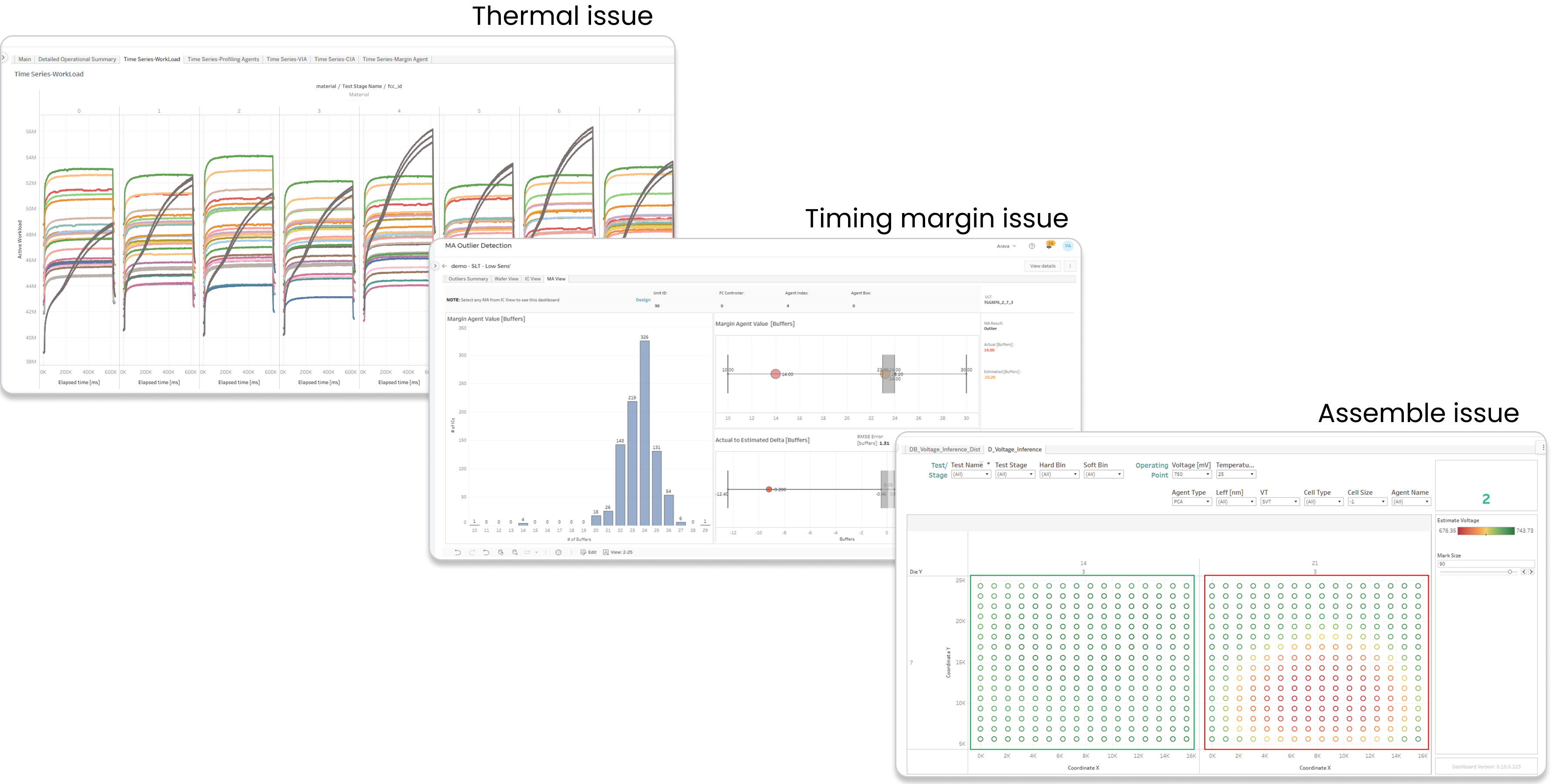
Detect assembly, power delivery, thermal solution, and clock source issues during high-volume manufacturing, before they turn into escapes or costly RMAs.
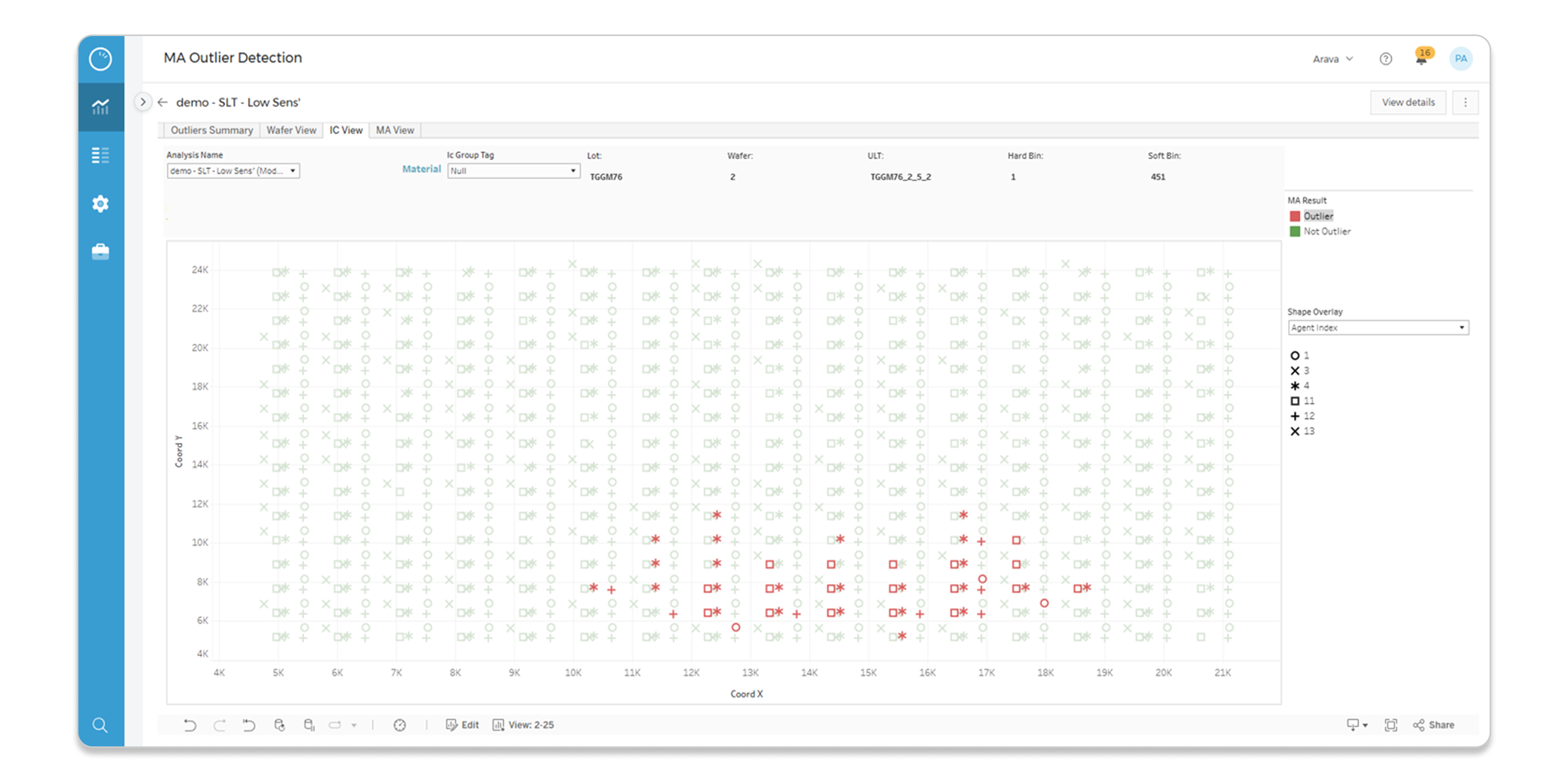
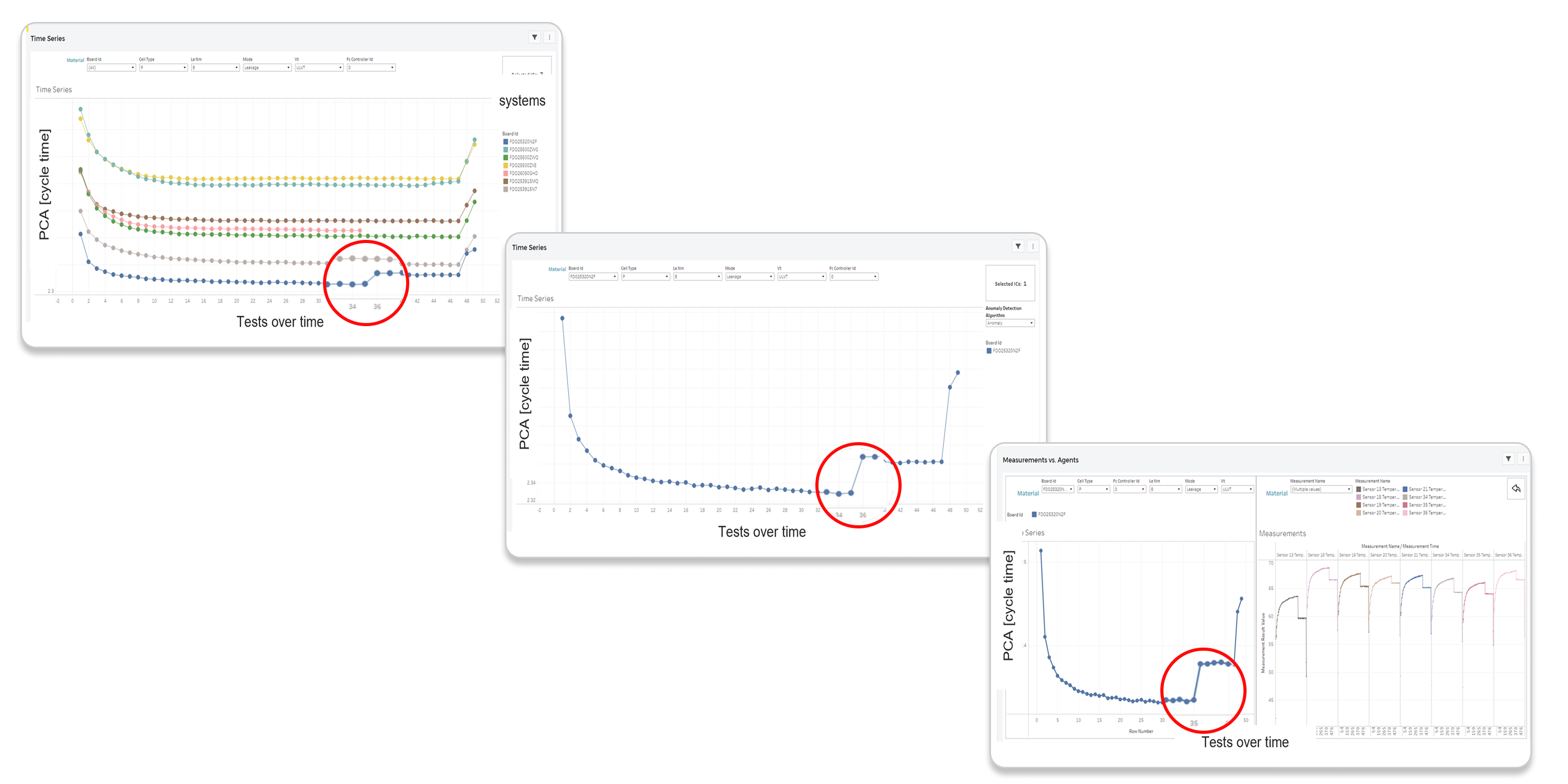
Correlate data across production stages to quickly trace issues back to their source, reducing investigation time and accelerating issue resolution.
Identify missed defects in real time, including thermal solution issues, assembly defects, power delivery and clock integrity problems, and timing margin anomalies, before they escape to the field.
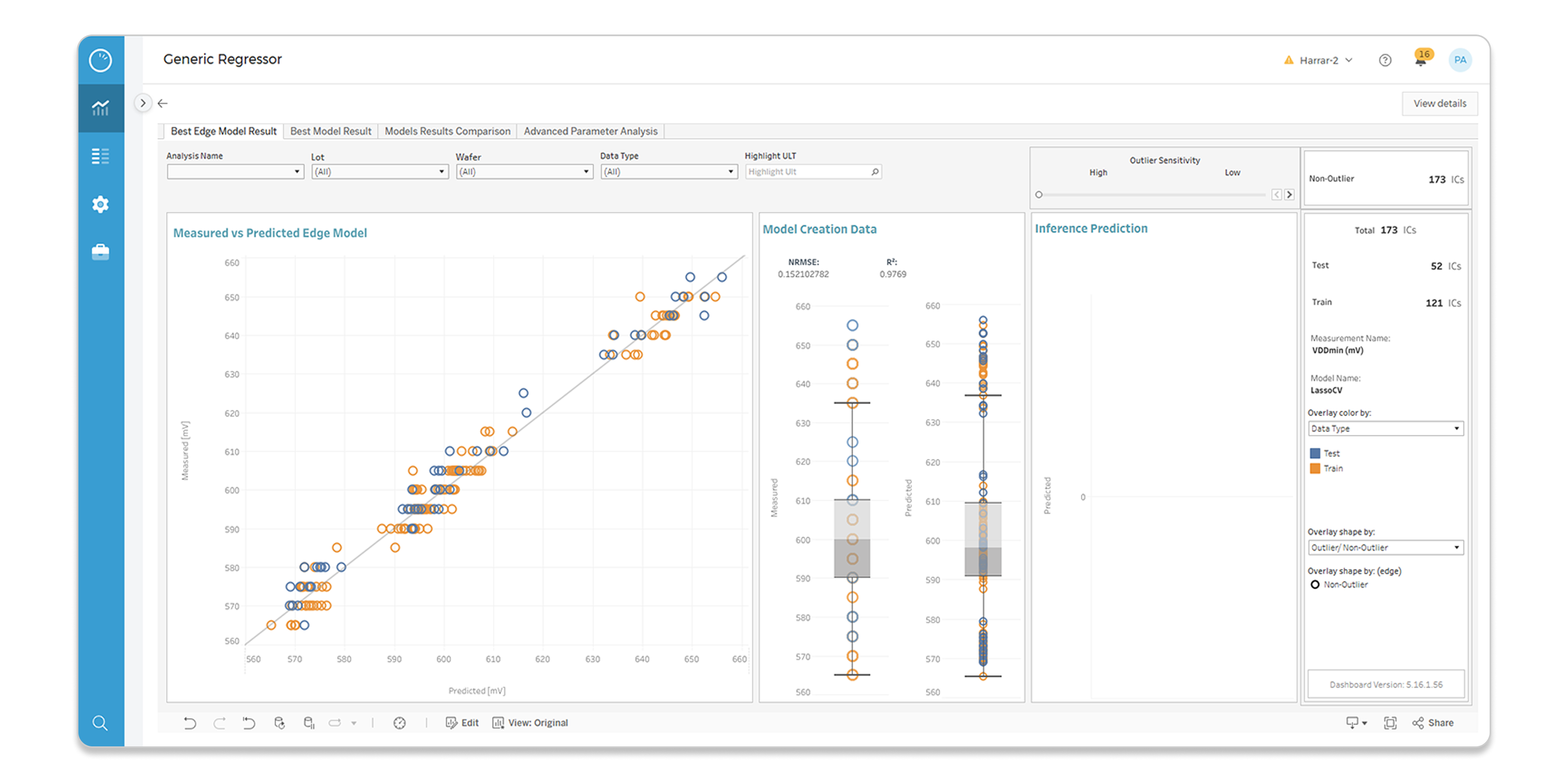
Leverage Agent measurements and ML models to dynamically refine the voltage settings established during chip production testing, and tailor them for real-world system workloads and system environment.
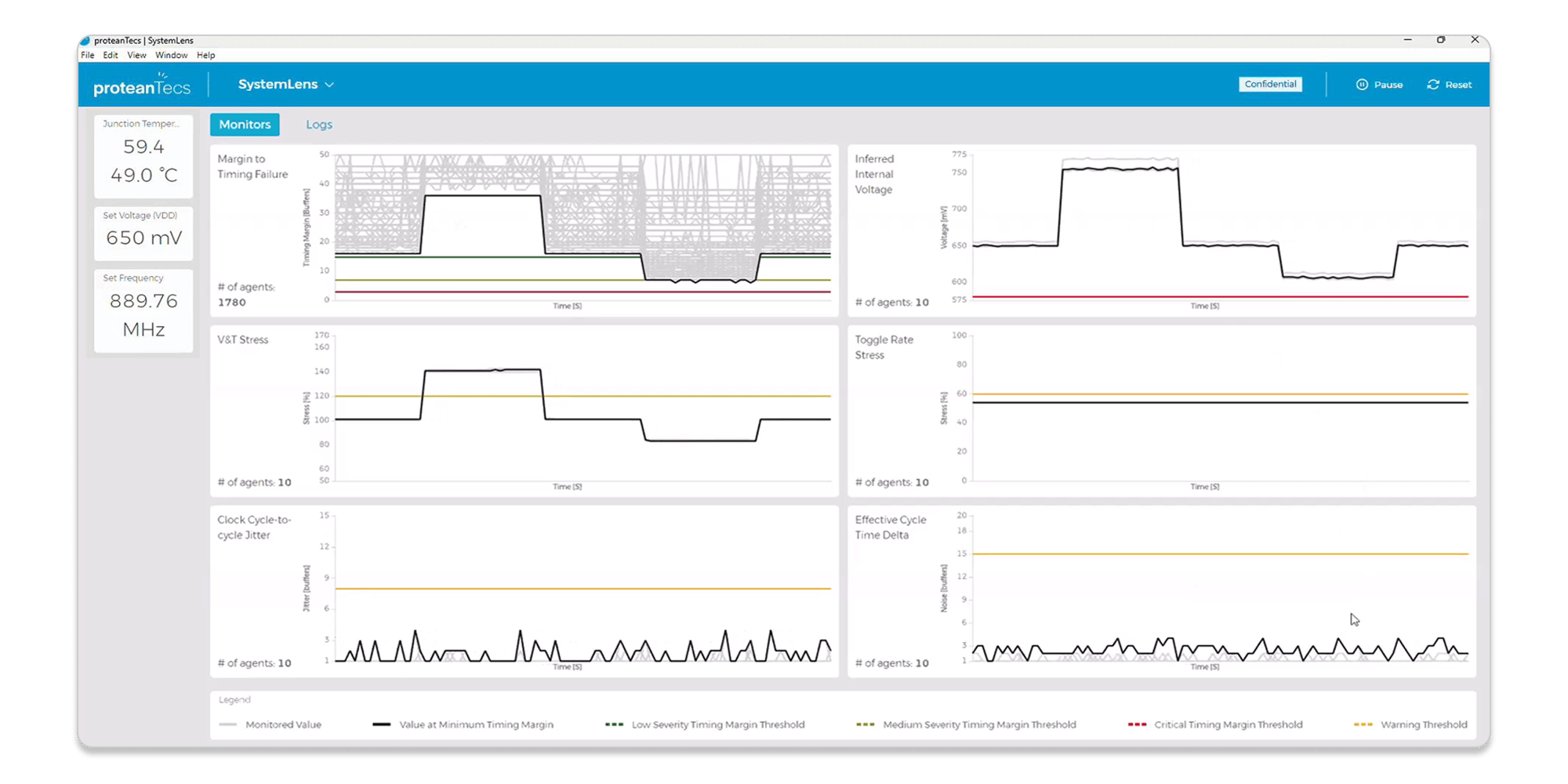
Live, high-resolution visibility into system behavior to enable faster debug, root-cause analysis, and RMA investigation directly on the system under test.
June Paik • CEO, FuriosaAI
Michal Geva • VP and GM of OTA and Cybersecurity, HARMAN
Get answers to common questions about how proteanTecs bridges silicon and system behavior to deliver predictive insight, faster debug, and scalable quality across system production.
Traditional functional test provides pass/fail results. proteanTecs adds parametric telemetry visibility, revealing timing margins, power integrity behavior, workload impact, and system interactions, enabling predictive insights instead of binary results.
During system bring-up, teams often struggle with limited visibility into how silicon behaves under real software workloads and real operating conditions. The solution provides deep, real-time telemetry from inside the chip to accelerate root-cause analysis, reduce debug cycles, and shorten the path to production readiness.
Yes. The solution is designed to integrate seamlessly into existing functional test and production environments. It works alongside standard manufacturing flows, accessing on-chip telemetry through supported interfaces without requiring disruptive changes to the production line. Analytics can be deployed in the cloud or integrated into existing data infrastructures to support scalable, high-volume manufacturing.




.svg)

.svg)

.svg)