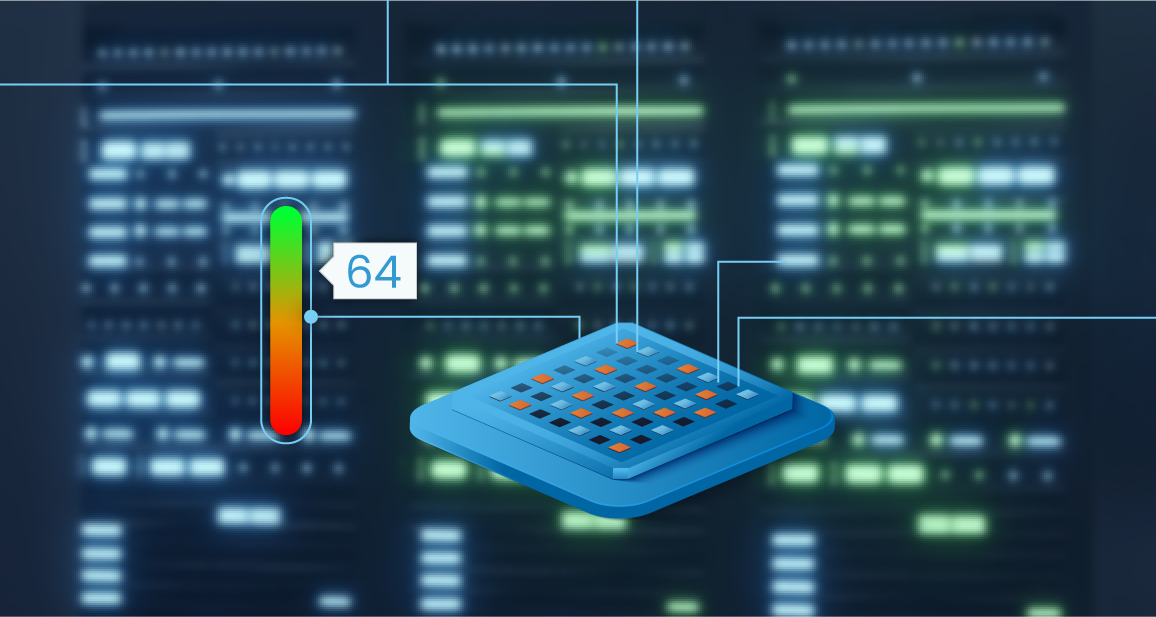
Hyperscale datacenters require intense computational power for compute-intensive tasks, such as AI, data analytics, machine learning, and big data processing. They leverage parallel processing across multiple computers, in high-density servers, to handle complex tasks efficiently. This uses specialized, powerful processors and training and inference of specific GPUs or ASICs. Such chips are based on the most cutting-edge semiconductor technology and smallest process geometries to achieve their goals. But while smaller process geometries and advanced architectures enable faster, more power-efficient chips, they also introduce challenges related to lifetime performance and reliability. In particular, the rise of silent data corruption (SDC), which can go undetected by conventional monitoring methods, threatens the integrity of data and AI model accuracy, leading to significant disruptions and financial losses.
In this white paper, we'll cover:
- An introduction of proteanTecs' Real-Time Health Monitoring (RTHM) application, a proactive solution designed to predict and prevent failures before they occur.
- How RTHM shifts reliability beyond just error detection to failure avoidance.
- How RTHM enables predictive maintenance, prescriptive actions, and fast imminent failure detection.
- Unique challenges posed by advanced electronics and demonstrates how RTHM can enhance reliability, availability, and serviceability (RAS) in high-performance datacenters